Wednesday, April 9, 2014

Personal Philosophy

“Whether you think you can, or you think you can’t – you’re probably right” – Henry Ford. Life has its up and its downs, its peaks and its valleys, its highs and its lows. No matter who you are, it happens to everyone, but not everyone carries themselves out and reacts to situations in the same way. Some people for instance, walk out of their front door with the utter confidence to try court any girl or boy that they see without fear of rejection; if things go wrong they simply say, “on to the next one”. Then there are the rest of us, like myself, who do not even trust ourselves enough to know that we turned the stove off before leaving the house. If you’re like me, then you probably also do not believe in yourself when it comes to school. You probably don’t believe in yourself to make that sports team. You probably do not believe in yourself when life throws a challenge at 90 mph hour at you. Heck, you might not even believe that you can tie your own shoe (I’ve been there). The only thing you do believe in is how you know you cannot do things – but why? Are you scared of failure? Are you making excuses to not put in the work? In my seventeen years of existence on Earth, the one thing I can say without a doubt is that one should always believe in him or herself. No matter how cliché it may sound, or how many times you have seen it as a hallmark card, it is absolutely essential to life. Simply put, I believe that it is necessary to lead life with confidence and tackle all of its obstacles as such.

               For the large chunk of my life, I was an overweight kid. Since I was born, I always had the chubby cute cheeks that everyone just wanted to pinch. My mom told me that when I was born, the doctor who handed me to her told her that I was “very healthy”. This cute chubbiness would short-lived however. Going into elementary school, most everyone could be described as a little bit pudgy because of their baby fat. However, going in to 4th and 5th grade, we were all starting to grow up and everyone was becoming lean and mean. I was that kid that would finish second to last running a 12 minute mile. I was also the kid that would get two cookies from the hot lunch line. Kids called me names like “fatso” or “elephant”. Going into middle school, things only got worse. I stayed the same, overweight, while all of the other guys were getting muscle definition.  I turned down invitations to go swimming with my friends because I didn’t want to take my shirt off and expose my blubber. In high school again, it got worse. Sports got more and more competitive and my extra weight just wasn’t useful. Midway through sophomore year, I decided to make a change; I was going to reduce my body fat percentage from 23 percent to at least 16 percent. When I told my friends, they joking said “Yeah, right, its’ gonna be hard to not eat those apple fritters”. They were right, it was. Not only would I have to change the way I eat, I would have to long sessions of cardio, and lift weights, and stretch, and basically just change the lifestyle I had been so accustomed to living  for 15 years.Against my addiction to processed sugars and yummy treats, I began my program. It was absolutely grueling. After the first week it was hard to walk let alone sit down. My body was in screaming agony and the soreness just would not subside. It was hard to grind out that extra push up. It was hard to add a measly five pounds to my squat. Most of all, it was hard to give up my eating habits.I swapped carrots for Cheetos, lemon-infused water for soda, and added a regimen of protein shakes along with other supplements. After about three weeks, I noticed significant changes. I had already lost  5 pounds. It was addicting. I just kept on going. I wanted to lose my weight so badly. And I did. At the beginning of junior year i had shed about 37 pounds and taken my body fat percentage down to 17 percent. 

Many goals may seem difficult to reach, maybe even impossible; however, if you believe in yourself, you can achieve anything.  It can be applied to any goal of yours, to any aspect of your life.Your friends, family, and society may doubt you and that is okay.. As long as you think you can, then you will be able to accomplish anything. Having a positive attitude and keeping a good mindset are key. It is good to have a backbone and think to yourself that you know you can be better.



Monday, March 24, 2014

Chapters 16 - 19, Assignment H

     In John Steinbeck's, The Grapes of Wrath, he tries to make every small aspect of the book intertwine with the bigger picture of the book as a whole. This is very evident when you compare the microcosm point of view in Chapter 16 to the macrocosm point of view from Chapter 17. 

     Chapter 16 is written in a microcosm point of view, meaning that it is basically focusing singularly on the Joad family along with the Wilsons. It tells the story of the never ending troubles that these two families must endure. The most notable adversity they face is when the Wilson's car begins to rattle and they find out that it has broken down yet again. When Tom proposes that the rest of the family continue on the California so that he and Casy can stay behind and repair and the catch up later, Ma aggressively interjects. She threatens to beat anyone up with a jack handle that tries to convince her otherwise. 

     Chapter 17 is written in a macrocosm point of view, meaning that it is focusing on the mass of the migrants as whole. The chapter chronicles how several migrant communities emerge on the side of the highway as a result of the mass exodus. These communities are described as several large families comprised of smaller families that have settled together. They establish their own unwritten laws, social etiquette, and moral behaviors. They include sharing food with the hungry and knowing ones place on the social ladder. Failure to comply by these statutes can lead to violent confrontations and banishment from the communities.   
     Chapter 16 and 17 are both related because they help establish the lives of the migrants in their personal point of views, and their societal point of views. The microcosm of Chapter 16 serves as a way to describe the desperation for individuals to stick together in time of crisis. Ma Joad will not let anyone from the family split up because she knows that they are doomed if they do. This desire to make oneself feel secure from the presence of other people directly connects into the macrocosm of Chapter 17. Families know that the migrant camps will probably be better compared to if they were to stay independent and solitary. People want to be around other people and have a sense of someone looking out for them. This is especially true because the families willingly give up their own food and resources and follow sometimes unfair laws just to be part of a larger group. Chapter 16 implied that a family cannot split apart because the who else we look out for its members. Chapter 17 builds upon that very idea in that people of similar backgrounds that are going through similar troubles must come together to defeat a common foe and try to make the most of the situation, even if it means living with certain injustices. 

Tuesday, March 18, 2014

*Chapters 16 - 19, Assignment C

     The following poem is written from the viewpoint of a bitter, pessimistic farmer. It will explore the evils of greed and what terrible things have come to the farmers as a result of it. It will explore the feelings of despair, sadness, and longing for a new type of world to live in that the farmer experiences. Some of the viewpoints in this poem are a reflection of John Steinbeck's own personal philosophies.

Once i was an independent man
who drank out of my own can
Appreciated life's simple pleasures
Never had to complain 
My land was my treasure

But the dust came hard
This certainly werent my card

My corn weren't growin' 
So I had to get on goin' 
Got replaced by machines
So I had to make a scene
But these rich ol' bankers 
Brought in their tankers
So i had to get on goin'

Already had no money
Had to sell the wedding ring
of me and my honey
Got enough to barely buy some string
She lost her ring
Her face was a fret
Never had I seen her so upset

So we had to get on goin' 
Bought an ol' jalopy 
To get us to Calefornea 
Shoulda' known the salesman was so sloppy
The Ford Model Junk
was quite the clunk
Oh we had been cheated

Those damn capitalists 
left my children unfeeded
Left us utterly heated
We didn't deserve this

They were just greedy
Never once thought about the needy

It ain't good for the nation's health
For dem bankers to have all the wealth
What about the rest of us?
This must be a futile fuss


Chapters 11 - 15, Assignment G

     The motif of selfishness and one's obligation to another human being is an aspect of The Grapes of Wrath that really takes shape in chapters 11-15. Steinbeck initially gives off the idea that humans are hopelessly greedy and only look out of themselves. He comments on capitalism's selfish motives and does hesitate to openly criticize its very heart and soul, the bank. However, Steinbeck does make the effort to recognize and applaud the humaneness that some good individuals possess:

     "There was a family of twelve and they were forced off the land. They had no car. They built a trailer out of junk and loaded it with their possessions. They pulled it to the side of 66 and waited. And pretty soon a sedan picked them up. Five of them rode in the sedan and seven on the trailer, and a dog on the trailer. They go to California in two jumps. They man who pulled them fed them." (122). 
 
     In the first quote from the book, the narrator recalls a seemingly impossible, but true story that would absolutely boggle the mind of any migrant traveling to California in the 1940's. Basically, he tells a story of a a family that had no choice but to hope that someone would pull them and their trailer to California, and someone did. This person was awfully kind and five of the family members even got to ride in the sedan. This good samaritan even fed these god-forsaken people. This quote contributed to the overall message of the text by displaying the motif of one's responsibility to help out a fellow human in a time of need. An absolute stranger in a random car went as far as to tow a random family and their trailer all the way to California. He even fed them, which must have cost him a great deal of money. By putting this tale of a good deed into his book, Steinbeck is trying to convey the message that even though the world is greedy and only cares about themselves, there is still hope. He is saying that it only takes one random act of kindness from a stranger to restore hope in the heart of a cynical individual. There are still people in the world that her inherently good-hearted humans.

     "God Almighty, Mae, give 'em bread. We'll run out 'fore the bread truck comes. Run out, then, goddamn it. (159 - 160).  

     In the second quote of the book, a cook named Al yells at a waitress named Mae in a coffee shop on Route 66. A poor man wearing tattered clothes comes into the store along with his two sons to try to buy a loaf of bread for a dime. However, Mae insultingly tells them that their diner is not a grocery store and that even if she were to sell it to them, she would have to charge them fifteen cents. Al then yells at her to just give them the bread. She interjects saying that the bread is for making sandwiches and that they will run out if she gives them a whole loaf. Al then says that then they will have to run out. This instance of kindness by the head cook of a diner to a man in need again helps reinforce the motif of one's responsibility in helping another person in need. Al recognizes that this man and his children obviously need some food and do not have very much money to spare for the rest of their long journey. In response, he selflessly commands Mae to give them the bread. He puts aside his own self-interest and the interest of the coffee shop's business to help out a fellow human being. That one loaf of bread was 15 cents but he sold it to the man for 10 cents, and thus lost money. Also, if more people were to come in to have a sandwich, they would run out of bread and thus could not run their business till the bread truck were to stop by again. This also would cause an indirect loss of money. Nonetheless, he helps the man out. Steinbeck again tries to convey the message that although most people are greedy, things can happen that restore hope in the goodness of mankind. 


Thursday, March 13, 2014

Chapters 11 - 15, Assignment B


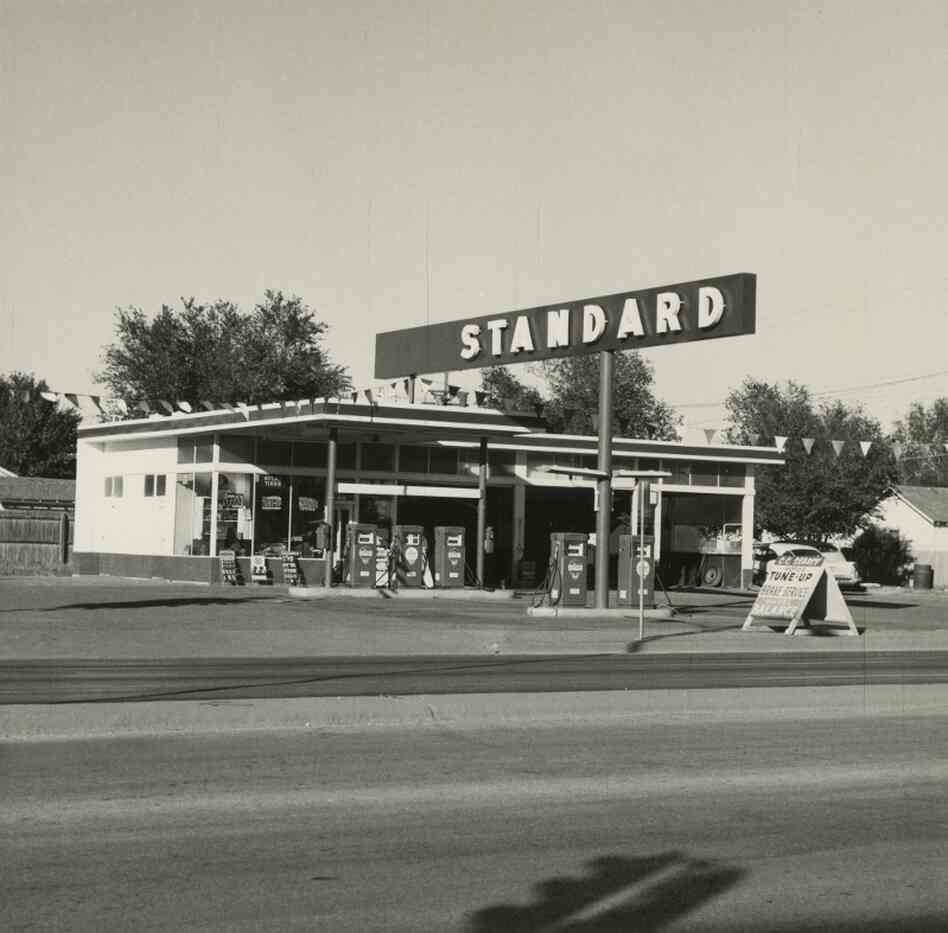
     Route 66 is one of the most recognizable pieces of infrastructure in the United States of America. The government originally passed legislation to pave this road in 1926 as a way to connect Chicago, Illinois to Los Angeles, California.                    
                                                              Image 1
However, it was not built linearly in between these two cities but zig-zagged its way across the country in an effort to connect the streets of urban communities with those of rural ones; this would be the first time many small towns would have access to a major road. Although it is called a highway, its by no respects like those of our modern world. Route 66 was only a two-lane road. This highway also created opportunities for many businesses to open along its route. Countless motels, diners, gas stations, and car shops opened to profit off of the travelers' helplessness.It has since then become a part of popular culture because of John Steinbeck's The Grapes of Wrath, and it being used as the setting for the Disney-Pixar animated film, "Cars".

                                                               Image 2

     Route 66 is very significant to the Joad family and all the other migrants traveling on it. They all realize the harsh reality of traveling the seemingly endless 2000 mile stretch. It is not a friendly place because just like them, there are thousands upon thousands other migrants searching for work in California. It ends up being a futile attempt at a better life, especially for the Joads. They are first taken advantage of by brokers who purchase their goods at ridiculously low prices. Then, they are scammed by salesman at the car dealers. And then Grandpa passes away. They are trying to escape a terrible life in Oklahoma by traveling the hellish Route 66 to go to California with no guarantee that their life will be any better.

                                                            Image 3

Sources:
http://adventure.howstuffworks.com/route-66.htm
http://www.national66.org/resources/history-of-route-66/

Saturday, March 8, 2014

Chapters 1 - 10, Assignment H

"Behind the harrows, the long seeders—twelve curved iron penes erected in the foundry, orgasms set by gears, raping methodically, raping without passion. The driver sat in his iron seat and he was proud of the straight lines he did not will, proud of the tractor he did not own or love, proud of the power he could not control. And when that crop grew, and was harvested, no man had crumbled a hot clod in his fingers and let the earth sift past his fingertips. No man had touched the seed, or lusted for the growth. Men ate what they had not raised, had no connection with the bread. The land bore under iron, and under iron gradually died; for it was not loved or hated, it had no prayers or curses.” (36). 

      In the passage above from Chapter 5 of The Grapes of Wrath, certain words have been color-coded red because they are all related phrases that help with the description of what the author, John Steinbeck is trying to say. These words have all been grouped together because they all have a sexual/emotional meaning. Steinbeck says that the tractors "rape" the ground and the Earth with their "penes" to illustrate how brutally the new ages of farmers work. He says that they have never "loved" the ground and thus are utterly disconnected from their food and their work. He uses this diction to illustrate his feelings of helplessness to watch something he has loved so dearly and worked so hard on be savaged by some machine. Ultimately, these words help in the description because they add some personal emotion to what is happening and not just telling a straight account of what literally happened. 

Chapters 1 - 10, Assignment G

     A major conflict that is developing in The Grapes of Wrath is man v. society.

     In this tumultuous time period of American history, people are forced to make choices and do things that are not socially accepted and are totally radical. A prime example of a person who demonstrates this very bravery is Jim Casy. He was a preacher that baptized a young Tom Joad but chose to give up his religious practice because he had a bad habit of taking the girls in the congregation "out in the grass". Jim has an epiphany about his sexual habits; he asserts that people are too concerned with Jesus and not enough with themselves, "I figgered about the Holy Sperit and the Jesus Road. I figgered, 'Why do we got to hand it on God or Jesus? Maybe, ' I figerred, 'maybe it's all men an' women we love; maybe that's the Holy Sperit - the human sperit - the whole shebang. Maybe all men got one big soul ever'body's a part of.'" (24). Casy's idea challenges his theocratic society's very fabric of order. He is creating a new philosophy for himself that will most like be thrown down by the scornful public. Especially since he was once a preacher, there would no way that he could fabricate such controversial ideas without backlash from his religious peers.

    Although the freedom of intellectual thinking and personal opinions is stricken, it is not the only thing that man must battle against society for. Farmers in this era like the Joads are forced to take the negative consequences of being extremely poor. The gap in wealth distribution is atrociously wide as the rich have more money than they could dream of and the working class does not have any at all. Farmers like the Joads have decided to become part of a mass exodus to California because of its many working opportunities. However, it is difficult to finance their trip so they have to sell all of their belongings to brokers, who are offering terribly low prices, "Fifty cents isn't enough to get for a good plow. That seeder cost thirty-eight dollars. Two dollars isn't enough." (86). The farmers have to face the broker's insensitivity and disrespect to their belongings. It is a struggle that they have to endure because they have no other choice. They have to sell some of their most prized possessions, weather they have monetary or emotional value or both, for pennies to people that are taking advantage of them only to make a profit. All of society is out for themselves and in this case, man is have a lot of trouble.